Key Takeaways
- Agentic AI is Autonomous: Unlike traditional AI, Agentic AI can independently reason, plan, and execute multi-step tasks to achieve a goal, making it ideal for complex enterprise workflows.
- Infrastructure-as-a-Service for Agents: AWS Bedrock AgentCore provides the foundational IaaS (Infrastructure-as-a-Service) needed to build and run custom agentic AI systems with frameworks like LangGraph or CrewAI.
- Decoupled Architecture for Control: AgentCore separates the core components of an agentic system: a Runtime for custom logic, a Gateway for secure tool use, and Memory for persistent, stateful interactions.
- Bring Your Own Brain: AgentCore is protocol-agnostic, allowing you to run any cognitive architecture (the “brain”) in a containerized environment, giving you full control over your agent’s reasoning process.
- Governance and Security First: The AgentCore Gateway and Identity services provide a crucial safety layer, enforcing policies on tool usage and propagating user identity to ensure Zero Trust security.
- Built for Complex Systems: With support for long-running tasks, shared memory for multi-agent collaboration, and deep observability, AgentCore is designed for building sophisticated, production-grade agentic applications.
In the rapidly evolving landscape of artificial intelligence, the concept of agentic AI has moved from a research novelty to a production necessity. Unlike traditional AI models that simply respond to prompts, agentic AI systems are designed to be autonomous—they can reason, plan, and act independently to achieve complex goals. These systems, often composed of multiple specialized AI agents, can collaborate to tackle intricate business workflows, making them a transformative force for the enterprise.
However, building enterprise-grade agentic AI presents significant challenges. It requires a sophisticated architecture that can handle stateful, long-running tasks, secure tool usage, persistent memory, and scalable orchestration. While early frameworks provided a path to building agents, enterprise requirements for security, governance, and control often outgrow them.
Enter AWS Bedrock AgentCore.
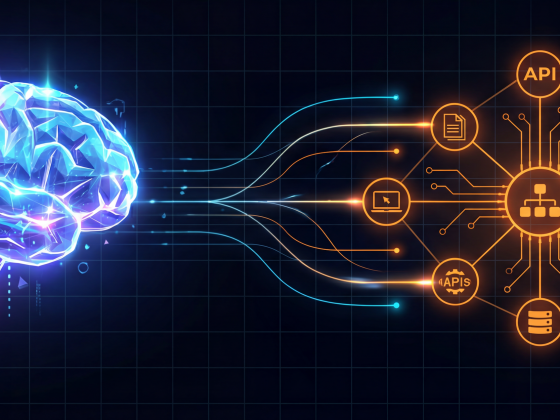
AgentCore is not just a feature update—it is a paradigm shift for building agentic AI on the cloud. It is Infrastructure-as-a-Service (IaaS) for AI Agents, providing the foundational pillars needed to run your own advanced cognitive architectures. Whether you use LangGraph, CrewAI, Autogen, or custom Python loops, AgentCore offers a secure, serverless, and purpose-built infrastructure that solves the “hard parts” of agentic AI: persistent memory, identity management, tool governance, and a scalable runtime.
This article is a technical deep dive into architecting production-grade agentic applications with AWS AgentCore, demonstrating how to move from simple chatbots to truly capable autonomous systems.
The AgentCore Architecture: A Foundation for Agentic AI
Traditional serverless functions like Lambda are not built for agentic AI, which is inherently stateful, long-running, and requires complex context management. AgentCore provides a modular suite of services designed specifically for these workloads.
The Core Components
- AgentCore Runtime: This is a serverless compute environment optimized for AI agents.
- MicroVM Architecture: Provides strict, Firecracker-like isolation with warm pools for low-latency performance.
- Long Duration: Supports complex reasoning or “slow thinking” tasks with workloads running up to 8 hours.
- Protocol Agnostic: It is completely flexible. If your agentic logic runs in a container (using LangChain, LlamaIndex, or raw Python), it runs here.
- AgentCore Gateway (The MCP Bridge): This is the central hub for secure tool use in your agentic system.
- Model Context Protocol (MCP): The gateway is built around the MCP, a standardized protocol for tool interaction.
- Automatic Tool Projection: It automatically projects your existing AWS resources like Lambda functions, APIs, and databases as MCP-compatible tools for your agent to use.
- Policy & Governance: It intercepts every tool call, validating it against natural language policies (e.g., “Agents can only access data for the currently authenticated user”). This enforces security before the call ever reaches the tool.
- AgentCore Memory: A critical component for creating stateful agents that learn and improve.
- Managed State: It provides a managed vector and key-value store, separating the agent’s memory from its compute.
- Episodic Memory: It can automatically index past interactions, allowing agents to “learn” from previous sessions without bloating the context window.
- Shared Memory: Enables a “swarm” of agents to read and write to a shared state, facilitating multi-agent collaboration.
- AgentCore Identity: This ensures Zero Trust security for your agentic workflows.
- Identity Abstraction: It abstracts OIDC/OAuth flows, propagating the end-user’s identity securely from the agent down to the underlying tools.
Developing the Agent: The “Bring Your Own Brain” Paradigm
AgentCore empowers you to bring your own “brain” or cognitive architecture. In this guide, we’ll simulate a production scenario: a Financial Analyst Agent that uses LangGraph for orchestration, AgentCore Memory to recall user portfolio details, and AgentCore Gateway to fetch live stock data.
Prerequisites
- AWS CLI & CDK installed.
- Python 3.10+
pip install bedrock-agentcore boto3 langgraph langchain-aws
Step 1: Initializing the AgentCore Client
The SDK provides a high-level wrapper around low-level boto3 calls, simplifying interaction with the infrastructure.
import boto3
from bedrock_agentcore import AgentCoreClient

# Initialize the client (automatically picks up IAM role in the Runtime)
client = AgentCoreClient(region_name="us-east-1")
Step 2: Implementing Persistent Memory
Production agentic AI must be stateful. Instead of managing Redis or DynamoDB manually, we use AgentCore’s memory primitives, which handle embedding and retrieval automatically.
from bedrock_agentcore.memory import AgentMemory

# Connect to the Managed Memory Store
memory_store = AgentMemory(
    client=client,
    collection_name="financial-analyst-memory",
    user_id_header="X-Amz-Agent-User-Id" # Propagated via Identity
)

def save_interaction(session_id, user_input, agent_response):
    """Saves the turn to AgentCore Episodic Memory."""
    memory_store.add_episode(
        session_id=session_id,
        input_text=user_input,
        output_text=agent_response,
        metadata={"topic": "portfolio_analysis"}
    )

def recall_context(user_input):
    """Retrieves relevant past advice or user facts via semantic search."""
    relevant_memories = memory_store.search(
        query=user_input,
        limit=3,
        min_score=0.8
    )
    return "\n".join([m.text for m in relevant_memories])
Step 3: Tool Usage via AgentCore Gateway (MCP)
This is AgentCore’s most powerful feature for secure agentic AI. You define your tools in AWS (e.g., a Lambda function querying a stock API), register them with the Gateway, and the Gateway exposes them as secure MCP Tools.
from bedrock_agentcore.tools import MCPToolClient

# Connect to the Gateway
gateway_client = MCPToolClient(gateway_endpoint="mcp://finance-tools.gateway.us-east-1.amazonaws.com")

def market_data_tool(ticker: str):
    """
    Fetches real-time data. The actual execution happens
    securely inside the AgentCore Gateway, not in the Agent's runtime.
    """
    # This call is intercepted by the AgentCore Policy engine for verification
    response = gateway_client.call_tool("get_stock_price", arguments={"ticker": ticker})
    return response.content
Step 4: The Orchestration Loop (LangGraph)
Finally, we bind the memory and tools together in our agentic logic running inside the AgentCore Runtime.
from langgraph.graph import StateGraph, END
from langchain_aws import ChatBedrock

# Define the state for our agentic workflow
class AgentState(TypedDict):
    messages: list
    context: str

def retrieve_memory(state: AgentState):
    query = state["messages"][-1].content
    context = recall_context(query)
    return {"context": context}

def generate_response(state: AgentState):
    llm = ChatBedrock(model_id="anthropic.claude-3-5-sonnet-20240620-v1:0")

    # Inject memory context into the system prompt for better reasoning
    system_prompt = f"Use this history: {state['context']}"
    messages = [("system", system_prompt)] + state["messages"]
    response = llm.invoke(messages)

    # Asynchronously save the interaction to long-term memory
    save_interaction(
        session_id="current-session",
        user_input=state["messages"][-1].content,
        agent_response=response.content
    )
    return {"messages": [response]}

# Build the graph representing the agent's reasoning loop
workflow = StateGraph(AgentState)
workflow.add_node("memory", retrieve_memory)
workflow.add_node("agent", generate_response)
workflow.set_entry_point("memory")
workflow.add_edge("memory", "agent")
workflow.add_edge("agent", END)
app = workflow.compile()
Production Deployment: The AgentCore Runtime
For enterprise scale, deploying agentic AI isn’t just “uploading a zip.” We containerize the agent and define the infrastructure as code.
The Dockerfile
The AgentCore Runtime expects a standard container interface.
FROM public.ecr.aws/lambda/python:3.11

# Install AgentCore SDK and other dependencies
COPY requirements.txt .
RUN pip install -r requirements.txt

# Copy agent code
COPY agent.py .

# The AgentCore Runtime Interface Emulator (RIE) handles the invocation
CMD ["agent.handler"]
Infrastructure as Code (AWS CDK)
We define the Runtime, Gateway, and Identity resources using the AWS CDK.
import * as agentcore from 'aws-cdk-lib/aws-bedrock-agentcore';
import { Stack, Duration } from 'aws-cdk-lib';

// 1. Create the Identity Pool
const agentIdentity = new agentcore.AgentIdentity(this, 'FinAgentIdentity', {
    allowedPrincipals: ['arn:aws:iam::123456789012:role/UserRole']
});

// 2. Create the Gateway (The Tool Hub)
const gateway = new agentcore.Gateway(this, 'FinToolsGateway', {
    identity: agentIdentity,
    tools: [
        agentcore.Tool.fromLambda(stockPriceLambda) // Expose Lambda as a secure tool
    ]
});

// 3. Create the Runtime (The Compute)
const runtime = new agentcore.Runtime(this, 'FinAgentRuntime', {
    code: agentcore.Code.fromAsset('./agent-docker'),
    memorySize: 2048, // MB
    timeout: Duration.minutes(15),
    environment: {
        GATEWAY_ENDPOINT: gateway.endpointUrl,
        MEMORY_COLLECTION: 'financial-analyst-memory'
    }
});
Advanced Agentic Capabilities
AgentCore is more than just infrastructure; it provides built-in capabilities essential for sophisticated agentic AI systems.
- Built-in “Super Tools”: AgentCore includes fully managed tools you don’t need to build, such as a Code Interpreter for sandboxed Python execution and a Browser Tool for secure web scraping.
- Observability & Tracing: Because AgentCore is infrastructure, it offers deep hooks into Amazon CloudWatch and X-Ray. You can trace how long an LLM call took, view memory retrieval latency, and track token usage costs per user or session.
- Policy as Code: The “Safety Layer” is decoupled from your prompt. In the AgentCore console, you can define fine-grained natural language policies like
"The Agent may strictly browse only URLs ending in .finance.com"or"The Agent cannot execute tools if the user is not in the 'Premium' group."
Summary: Why Choose AgentCore for Agentic AI?
The choice between a fully managed service and a flexible IaaS platform depends on your needs. This table clarifies when AgentCore is the right choice for your agentic AI strategy.
| Feature | Bedrock Agents (Classic) | Bedrock AgentCore |
|---|---|---|
| Orchestration | Managed (Chain of Thought) | Custom (LangGraph, CrewAI, Code) |
| Compute | Opaque (Managed by AWS) | Serverless Containers (You control dependencies) |
| State/Memory | Session-based (Short-term) | Episodic & Shared (Long-term managed DB) |
| Tools | Lambda Actions | MCP Gateway (Standardized & Governed Protocol) |
| Best For | Quick chatbots, simple tasks | Complex Enterprise Agents, Multi-Agent Systems |
AgentCore is the definitive choice for engineers building the next generation of AI applications where control, persistence, and security are non-negotiable. By leveraging the dedicated Runtime for compute, the Gateway for tools, and Memory for state, you can build agentic AI that is not just chatty, but truly capable.
Frequently Asked Questions
What is Agentic AI?
Agentic AI refers to an advanced AI system that can operate autonomously to achieve predefined goals with limited human supervision. 2 Unlike passive AI that only responds to commands, agentic systems can proactively plan, make decisions, use tools, and adapt their actions based on their environment to complete complex, multi-step tasks.
Why is AWS Bedrock AgentCore good for building Agentic AI?
AgentCore is specifically designed to solve the hardest infrastructure problems of building agentic AI. It provides a secure, scalable, and flexible foundation with separate components for compute (Runtime), tool use (Gateway), memory (Memory), and identity. This allows developers to focus on the agent’s cognitive architecture (the “brain”) while relying on AWS for the enterprise-grade infrastructure.
What is the difference between Bedrock Agents (Classic) and Bedrock AgentCore?
Bedrock Agents (Classic) is a fully managed service for creating simple, chatbot-like agents with a predefined orchestration (Chain of Thought). Bedrock AgentCore, on the other hand, is an Infrastructure-as-a-Service (IaaS) offering. It gives you full control to bring your own custom orchestration frameworks (like LangGraph or CrewAI) and run them on a purpose-built, secure infrastructure, making it ideal for complex, multi-agent enterprise systems.
How does AgentCore handle memory for stateful agents?
AgentCore provides a managed `AgentCore Memory` service that separates state from compute. It includes features for “Episodic Memory,” which automatically indexes past conversations for semantic retrieval, allowing the agent to “learn” without endlessly growing its context window. It also supports “Shared Memory” for multi-agent collaboration.
What is the Model Context Protocol (MCP) in AgentCore?
The Model Context Protocol (MCP) is a standardized interface used by the AgentCore Gateway to expose tools to the agent. This allows the agent’s logic to remain clean and simple, while the Gateway handles the secure execution and governance of tools like Lambda functions or external APIs. It acts as a secure bridge between the agent’s reasoning loop and the outside world.